
Convocatoria: número 37, noviembre 2026-febrero 2027
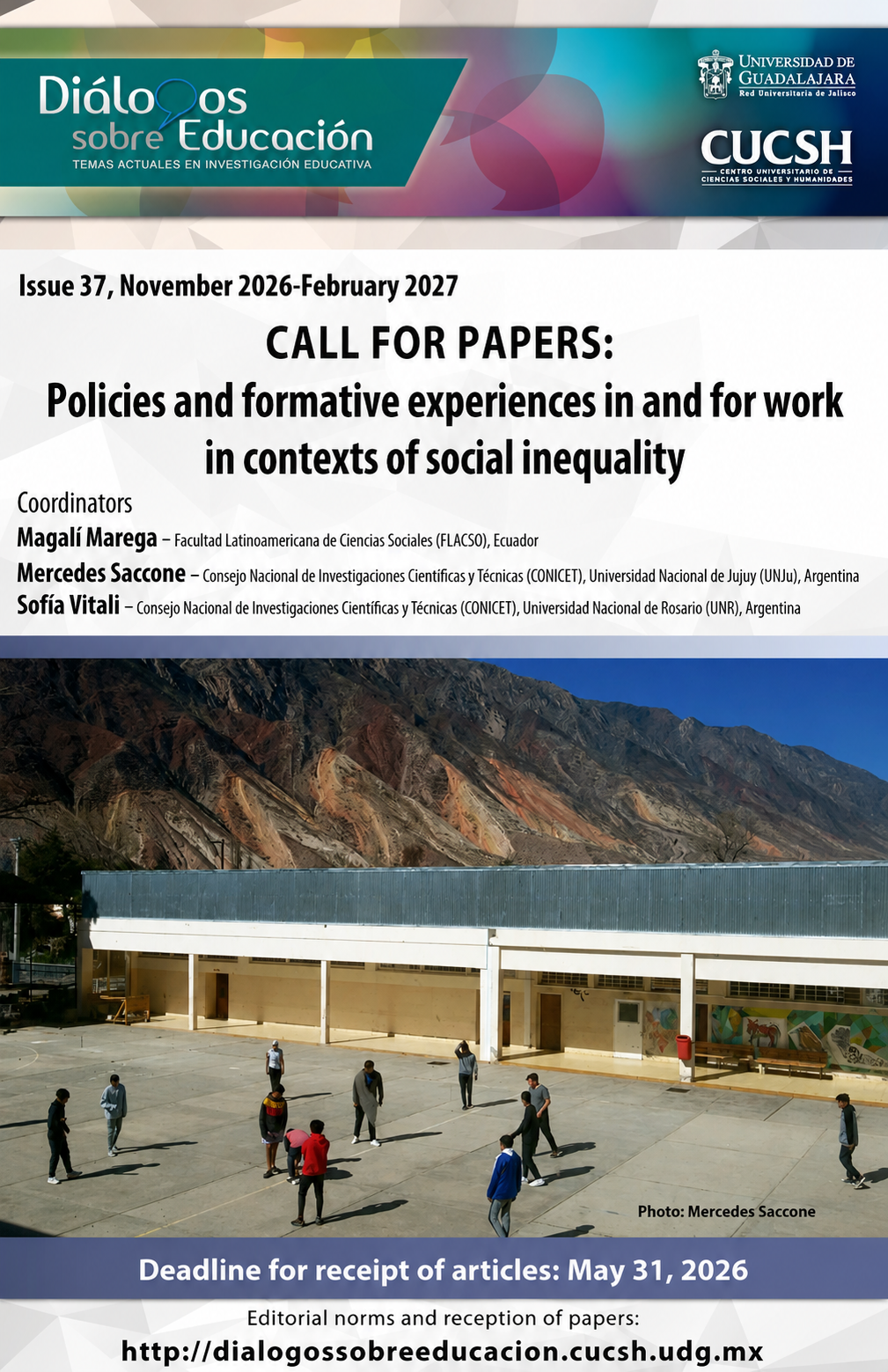
Over the past four decades, in step with the process of capitalist restructuring, profound changes have taken place in the world of work, giving rise to new social relations within which a multiplicity of forms of labor and worker subjectivities can be observed. Among the main transformations, we note a deterioration and segmentation of labor markets, ruptures in the link between education and employment, and the incorporation of new technologies. Likewise, in our Latin American region, these processes coexist with social formations linked to community, domestic, and family labor; slave, debt-bonded, and convict labor; and various concealed forms of wage labor (Van der Linden, 2014).
Within this framework, inquiry into training experiences in and for work, as well as into the impact of heterogeneous policies of socio-labor inclusion implemented across different contexts in Latin America, becomes indispensable. Departing from a broad conception of education—one that includes but also goes beyond the strictly school-based—we invite submissions to this dossier presenting work derived from completed or ongoing research, as well as critical theoretical discussions, on the policies and training experiences constructed in and for the world of work. In particular, though not exclusively, we are interested in studies that address the heterogeneous and unequal ways in which training experiences in and for work take shape, attending to the social processes and everyday cultural practices enacted by different subjects, as well as analyses of the initiatives, actions, practices, and effects of policies developed around this theme at different scales—local, national, and regional. We welcome accounts of training experiences developed in diverse settings (educational and/or labor-related, formal and informal, with varying degrees of institutionalization), through which participating subjects—young people, women, Indigenous peoples, racialized subjects, among others—actively appropriate knowledge, resources, meanings, and practices, as well as systems of use and expectation, always under specific historical and contextual conditions.
Below are some suggested thematic lines for this issue; however, they are neither exhaustive nor exclusive:
-Initiatives and effects of governmental policies developed around job training and socio-labor insertion at different scales—local, national, and regional. In particular, those related to the teaching of competencies in new technologies, traditional trades, and the development of work-related dispositions among marginalized social groups.
-Training and socio-labor capacity-building policies developed by non-governmental organizations and other civil society institutions, as well as diverse forms of intersectoral and interinstitutional synergy.
-Training experiences in and for work, considering the social processes and everyday cultural practices deployed in different labor contexts (formal and informal, family-based and community-based, with varying degrees of institutionalization).
-Training experiences in and for the world of work, with special emphasis on teaching and learning processes that take place in different educational settings (formal and non-formal, family, community-based, among others).
-Collective actions and practices aimed at the construction, transmission, and appropriation of knowledge, resources, and expectations related to work among different marginalized subjects—youth, women, Indigenous peoples, racialized subjects, migrants, among others.
-Training processes and experiences related to the use of new technologies in the labor market, situated between the qualification and de-qualification of work and the increasing control of the labor force.